Peptides have moved from medical journals to wellness conversations and social media feeds in a short span of years. That visibility has brought along a lot of mixed information about what peptides actually are and who they’re for. If you’re researching peptide therapy, peptide injections, or peptide-based wellness treatments, sorting fact from marketing buzz is a useful first step.
This guide walks through what peptides are, how they work, what they’re commonly used for, potential side effects to consider, and how to approach peptide therapy with a healthcare professional.
Disclaimer: This article is for educational purposes only and is not a substitute for medical advice, diagnosis, or treatment from a qualified healthcare provider. Not all peptides are FDA-approved, and individual outcomes vary based on the specific peptide, dose, delivery method, and personal health history. Speak with a licensed provider before starting any peptide therapy, changing your treatment plan, or purchasing peptides from any source.
What Are Peptides?
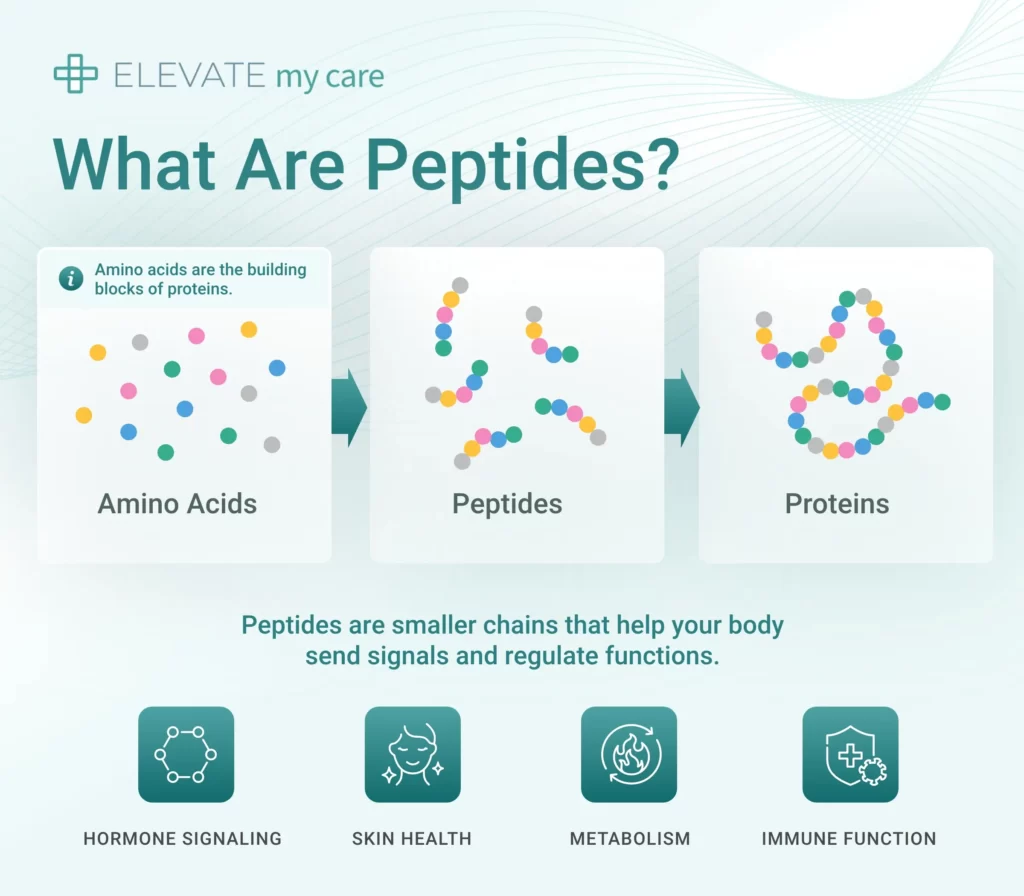
Peptides are short chains of amino acids, the same building blocks that make up proteins. The amino acids in a peptide are joined by peptide bonds, the chemical links that hold the chain together.
The main difference between peptides and proteins is length. Peptides are shorter chains, while proteins are longer and more complex structures that perform a wide range of functions throughout the body.
Many peptides act as signaling molecules, carrying instructions between cells by binding to receptors and triggering specific biological responses, including hormone regulation, immune function, and metabolism.
Some peptides occur naturally in the body, while others are obtained through food or produced in laboratories for medical and wellness applications.
Common examples of naturally occurring peptides include:
- Insulin, a 51-amino-acid peptide that helps regulate blood sugar levels
- Oxytocin, a 9-amino-acid peptide associated with childbirth, lactation, and social bonding
Insulin sits near the upper end of the peptide size range, which is why some sources classify it as a small protein rather than a peptide.
Peptides can also come from food sources. Researchers continue to study bioactive peptides found in:
- Collagen from fish and bovine sources
- Dairy proteins such as casein and whey
- Certain plant-based foods, including lentils
These food-derived peptides are being investigated for their potential effects on various aspects of human health.
How Do Peptides Work in the Body?
Peptides typically work by binding to receptors on or inside cells. When a peptide attaches to its matching receptor, it triggers a series of biological responses, similar to how a key fits into a lock and turns it.
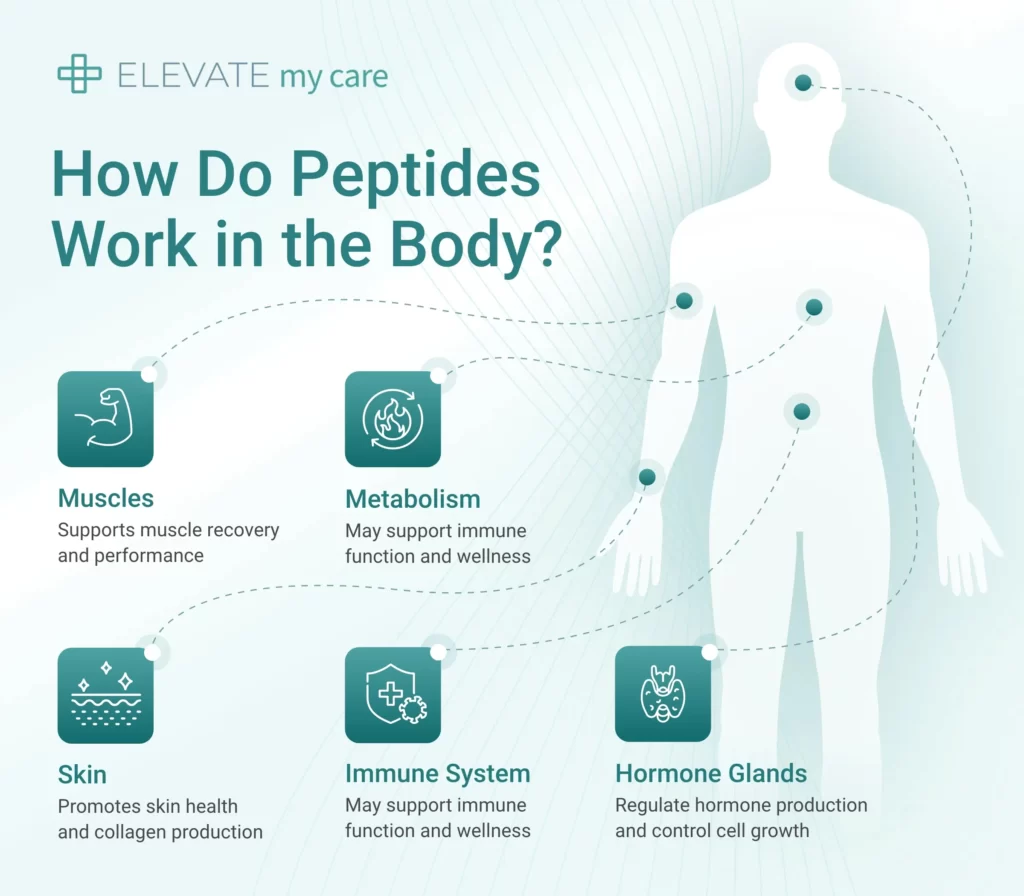
Because different peptides bind to different receptors, their effects can vary widely throughout the body. Depending on the peptide, these effects may influence:
- Growth hormone signaling
- Blood sugar regulation
- Skin health and elasticity
- Wound healing
- Inflammation
- Immune system activity
- Metabolism
This receptor-specific activity is one of the defining features of peptides. They tend to be highly targeted, interacting with only certain tissues or biological pathways. Insulin, for example, binds to receptors on muscle, fat, and liver cells, signaling them to absorb glucose from the bloodstream. Oxytocin binds to receptors on the uterine wall during childbirth and to receptors in brain regions involved in attachment.
Another important characteristic of peptides is that many are broken down relatively quickly by enzymes in the body, which is one reason peptide therapies are often delivered by injection rather than oral tablets. This helps the peptide reach the bloodstream and interact with its target receptors before being degraded.
Ultimately, there is no single “peptide effect.” A peptide’s activity depends on the specific molecule, the receptors it targets, and the biological systems involved.
What Are Peptides Used For?
Peptides are used in a variety of medical, wellness, and research settings. Some peptide-based therapies are FDA-approved for specific conditions, while others are being studied in clinical research or offered through specialized treatment programs under provider supervision.
Common applications include:
- Metabolic support and weight management. Certain peptide-based medications, including GLP-1 receptor agonists and dual GLP-1/GIP receptor agonists such as Tirzepatide, are prescribed to help regulate blood sugar and support weight management in eligible patients.
- Sexual wellness. Peptides such as PT-141 target pathways in the brain associated with sexual desire. This peptide is FDA-approved for hypoactive sexual desire disorder in premenopausal women and is sometimes used off-label in other patient populations under provider guidance. For more, see our guides to PT-141 dosage and PT-141 benefits.
- Growth hormone support and healthy aging. Peptides such as Sermorelin may stimulate the body’s natural production of growth hormone and are sometimes used in programs focused on recovery, body composition, or healthy aging.
- Skin health and aging. Collagen peptides and other dermatology-focused peptides may support skin elasticity, collagen production, and overall skin appearance. Some peptides are also incorporated into topical skincare products marketed for visible signs of aging.
- Recovery and wound healing. Researchers continue to study certain peptides for their potential role in tissue repair, wound healing, and recovery following physical activity or injury.
- Cellular and antioxidant support. Glutathione, a naturally occurring tripeptide, functions as an antioxidant and is used in some wellness protocols. Cellular health therapies such as NAD Injection and NAD+ Nasal Spray are often offered alongside peptide therapies, although they work through different biological pathways and are not peptides themselves.
- Emotional and social wellness. Oxytocin is sometimes used in specialized wellness settings because of its role in social bonding and emotional processing.
Whether any of these apply to you depends on the specific peptide, your health history, and what a licensed provider recommends after evaluation.
Types of Peptides You May Hear About
Peptides come in many forms, each with different functions, applications, and levels of clinical research. The categories below are among the most commonly discussed in wellness and healthcare settings.
- Collagen peptides are short peptide chains derived from collagen protein, typically sold as over-the-counter supplements.
- Peptide hormones are signaling molecules produced naturally by the body. Synthetic versions are used as prescription medications.
- GLP-1 receptor agonists are prescription medications that mimic hormones involved in blood sugar regulation and appetite signaling.
- Growth hormone secretagogues (GHS) are designed to stimulate the body’s natural growth hormone production rather than replacing the hormone the way synthetic HGH does.
- Dermatology peptides are short peptides formulated for topical use, including copper peptides and others designed to support collagen production.
- Other therapeutic peptides are prescription peptides used for specific clinical goals, typically dispensed by compounding pharmacies under provider oversight.
Categories often overlap, and a licensed provider can help determine which applies to your situation.
What Are Peptide Injections?
Peptide injections are a method of delivering certain peptide therapies directly into the body. They are commonly used when a peptide would be broken down during digestion or when consistent absorption into the bloodstream is important.
Most peptide therapies are administered through subcutaneous injections, meaning the medication is delivered into the fatty tissue just beneath the skin rather than into a muscle or vein. Depending on the treatment, the peptide may be supplied in a prefilled syringe, an autoinjector pen, or another provider-approved format.
Because peptides can affect hormone pathways, metabolism, and other biological processes, treatment should be supervised by a healthcare professional who can prescribe the correct dose and monitor for side effects. Telehealth platforms have made this kind of oversight more accessible.
Peptide Supplements vs. Peptide Therapy
Although both contain peptides, peptide supplements and medical peptide therapy serve different purposes and should not be viewed as interchangeable.
Peptide supplements are generally available over the counter and are commonly used to support wellness goals such as skin, hair, nail, or joint health. Collagen peptides are one of the most widely used examples. These products are intended for general use and are not tailored to an individual’s medical history or treatment needs.
Peptide therapy, on the other hand, involves prescription peptides used to address specific health or wellness goals under the supervision of a licensed healthcare provider. Treatment typically includes an evaluation, personalized dosing, ongoing monitoring, and adjustments as needed.
Potential Benefits of Peptides
The potential benefits of peptide therapy depend on the specific peptide, its intended use, and the individual receiving treatment. Different peptides interact with different biological pathways, which is why their effects can differ significantly.
Where evidence is strongest, peptide-based prescription medications like GLP-1 receptor agonists are FDA-approved for type 2 diabetes and certain weight management applications. PT-141 is FDA-approved for hypoactive sexual desire disorder in premenopausal women. Other peptides are being studied for muscle maintenance, recovery, immune support, and anti-inflammatory or antioxidant activity, though the research is still developing.
Patients often ask whether peptides can build muscle or accelerate recovery. Some are being investigated for those purposes, but results aren’t guaranteed. Be skeptical of any source promising guaranteed health benefits. Peptides aren’t shortcuts or miracle solutions.
Possible Side Effects
Side effects and risks vary by peptide, dose, delivery method, and individual medical history. A peptide applied topically for skin elasticity has a different risk profile than an injectable peptide affecting metabolism or hormones.
Commonly reported side effects across peptide therapies may include:
- Mild injection-site irritation
- Nausea or other digestive symptoms
- Headache
- Changes in appetite
- Changes in blood pressure
- Hormonal effects associated with certain peptides
- Potential interactions with other medications
Most are typically mild and may resolve on their own. Serious side effects are less common but can occur, particularly with peptides affecting hormones or cardiovascular function. Consult a healthcare professional before starting any peptide therapy to understand which risks apply to you.
Are Peptides FDA-Approved?
FDA approval depends on the specific peptide and its intended use, not the category as a whole. Some peptide-based medications are FDA-approved for specific conditions, others are used off-label, and some are still in research.
The more important consideration for most patients is sourcing. Buying peptides from social media accounts, research chemical sellers, or other unverified online sources is risky because their safety, purity, and potency can’t be reliably verified.
Products from these channels may contain contaminants or differ from what’s advertised. A licensed provider can prescribe and source treatments through reputable channels.
FAQs About Peptides
What are peptides in simple terms?
Peptides are short chains of amino acids, the same building blocks that make up proteins.
What are peptides used for?
Different peptides may be studied or used for goals like weight management, skin health, recovery, blood sugar support, sexual wellness, or muscle support, depending on the specific peptide.
What are peptide injections?
They’re a delivery method for certain peptide therapies that bypasses digestion. They should only be used under medical guidance.
Are peptides safe?
Safety depends on the peptide, the source, the dose, the delivery method, and your health history. A healthcare professional is the best resource for that conversation.
Are peptides the same as collagen peptides?
Collagen peptides are one type of peptide. The broader category includes many other types used in research, prescription medications, and wellness applications.
Getting Started With Peptide Therapy
Interested in whether peptide therapy may fit your wellness goals? Elevate My Care’s telehealth platform makes it simple to connect with a licensed provider from home. Review the full list of therapies offered, check the Elevate My Care FAQs, or contact Elevate My Care to start the conversation.
Disclaimer: This article is for educational purposes only and is not a substitute for medical advice, diagnosis, or treatment from a qualified healthcare provider. Not all peptides are FDA-approved, and individual outcomes vary based on the specific peptide, dose, delivery method, and personal health history. Speak with a licensed provider before starting any peptide therapy, changing your treatment plan, or purchasing peptides from any source.